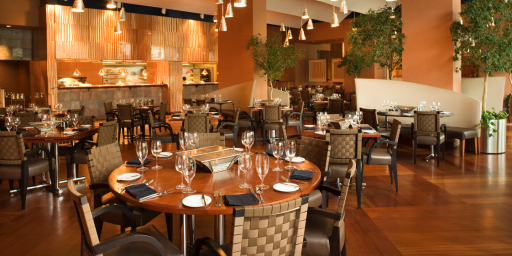
The owner didn’t sugarcoat it when we first sat down with him. Eighteen months earlier, he’d opened a small restaurant in the Edge District, right as that part of Memphis was starting to get real attention — breweries moving in, new foot traffic from the Medical District spilling over, that whole neighborhood finally shaking off its “forgotten” reputation. He’d bet on the timing. The food was good. His staff genuinely cared. And business was, in his words, “just okay,” which for a small restaurant with real overhead is often a polite way of saying it wasn’t sustainable much longer.
What made this one interesting wasn’t the turnaround itself, honestly — we’ve seen plenty of those. It was how much of the problem had nothing to do with the restaurant itself and everything to do with the fact that almost nobody searching for food in that part of Memphis was actually finding him.
What We Found When We Looked
His Google Business Profile existed, technically, but it had been claimed and mostly abandoned. A handful of photos from opening week, no menu listed, hours that were slightly wrong more often than they were right because he kept adjusting them seasonally without ever going back to update the listing. His website was a single page built by a friend, no menu online at all, just a phone number and an address.
Meanwhile, two newer places had opened nearby with far less runway — one had been open four months — and both were consistently outranking him for basically every relevant search. Neither one, by his own honest assessment, was better than what he was doing in the kitchen. They were just easier to find, and once someone found them, easier to trust enough to actually walk in.
That’s a rough thing to sit with as a business owner. He’d put everything into the food and the experience, and the thing quietly working against him the whole time was something that had nothing to do with either.
Why This Hits Differently in Memphis Specifically
Memphis has an enormous, genuinely competitive restaurant and hospitality scene, and a huge share of how people discover a new place — especially somewhere like the Edge District, which is still actively establishing itself as a destination — happens through search and social media rather than pure word of mouth. A restaurant with real quality but weak visibility isn’t just losing out on customers who might have discovered it eventually. It’s losing that discovery moment permanently to whichever competitor made themselves easier to find first, in a city where there’s rarely a shortage of other options within a five-minute drive.
There’s also something specific to how this particular neighborhood works. The Edge District draws people from the Medical Center’s daytime population, from downtown, from Midtown crossing over — it’s not a neighborhood built entirely on its own residential base the way some parts of Memphis are. That means a lot of the potential customer base genuinely doesn’t know the area well yet, and they’re making real-time decisions on their phone about where to eat, based almost entirely on what shows up and how trustworthy it looks in that moment.
What Actually Changed
A Full Google Business Profile Rebuild
We started here because it’s usually the fastest thing to fix and the thing most people are actually searching through first. Current hours, a full menu listed directly on the profile, real, current photos of the food and the space, and a proper system for responding to reviews going forward instead of the sporadic, months-apart replies he’d been managing before.
An Actual Website With a Menu People Could See Before They Arrived
This sounds almost too basic to matter, but it mattered enormously. A huge number of people deciding where to eat want to look at a menu first, on their phone, before committing to the drive. Not having one online — forcing someone to call and ask, or just guess — was quietly sending a meaningful chunk of potential customers to competitors who made that information available instantly.
Genuine, Specific Content About the Restaurant’s Actual Story
He had a real story — why he opened where he did, what he was trying to do differently, a genuine connection to the neighborhood’s ongoing transformation. None of that existed anywhere online before. We built it into the website and started incorporating it into social content, because Memphis audiences respond to authenticity, and a restaurant with an actual story to tell has a real advantage over one that reads as generic, if it actually tells that story.
Video Content Showing the Actual Food and Atmosphere
Static photos only do so much. Short, unpolished video — the kitchen in motion, a dish coming together, the actual atmosphere of the space during a busy Friday night — consistently performs better on social platforms than photography alone, and it gave people considering a visit a much more honest, compelling sense of what they’d actually be walking into.
What This Produced
Within about four months, he was telling us new customers were regularly mentioning finding him through Google or Instagram specifically — something that had essentially never come up before. Weekend traffic picked up noticeably, and for the first time since opening, he described the business as feeling stable rather than like something he was constantly worried about losing.
None of this involved changing anything about the food, the service, or what made the restaurant genuinely good in the first place. It involved finally making sure that quality had a real chance to be discovered by the people already searching for exactly what he was offering.
Why This Story Matters Beyond Just Restaurants
This pattern shows up constantly across Memphis, honestly — genuinely strong, well-run businesses quietly losing ground to less experienced, less capable competitors purely because of a gap in online visibility and presentation. It’s an uncomfortable thing to realize, especially for an owner who’s poured real effort into the actual quality of what they’re offering. But it’s also, in a strange way, good news, because it means the fix doesn’t require reinventing the business. It requires making sure the business’s real strengths are actually visible to the people out there looking for them.
How This Connects to a Broader Strategy
For a business like this, the work usually continues beyond the initial fixes with:
- Search Engine Optimization, building ongoing content that keeps the restaurant visible for relevant local searches over time
- Social media management, maintaining the consistent visual storytelling that started with the initial video content
- Review management, keeping the momentum going on generating and responding to genuine customer feedback
Why Understanding Memphis’s Neighborhoods Mattered Here
Glass House Strategies is based in Memphis, which meant we understood the Edge District’s specific situation — a neighborhood still actively building its own identity and drawing a customer base that doesn’t automatically know it well yet. Founder Caleb Barlow built the agency around being genuinely honest with clients about what’s actually happening with their business, which mattered here specifically. This owner needed someone to tell him plainly that the problem wasn’t his food — it was everything happening before someone ever tasted it.
Where This Leaves Other Memphis Business Owners
If you’re running a genuinely good business in this city and feel like you’re working harder than your results reflect, it’s worth asking honestly whether the gap is really about quality, or about whether the people who’d actually choose you can find you in the first place. More often than not in Memphis, it’s the second one — and that’s a far more fixable problem than most owners initially assume.